The 2 AM Call That Started Right
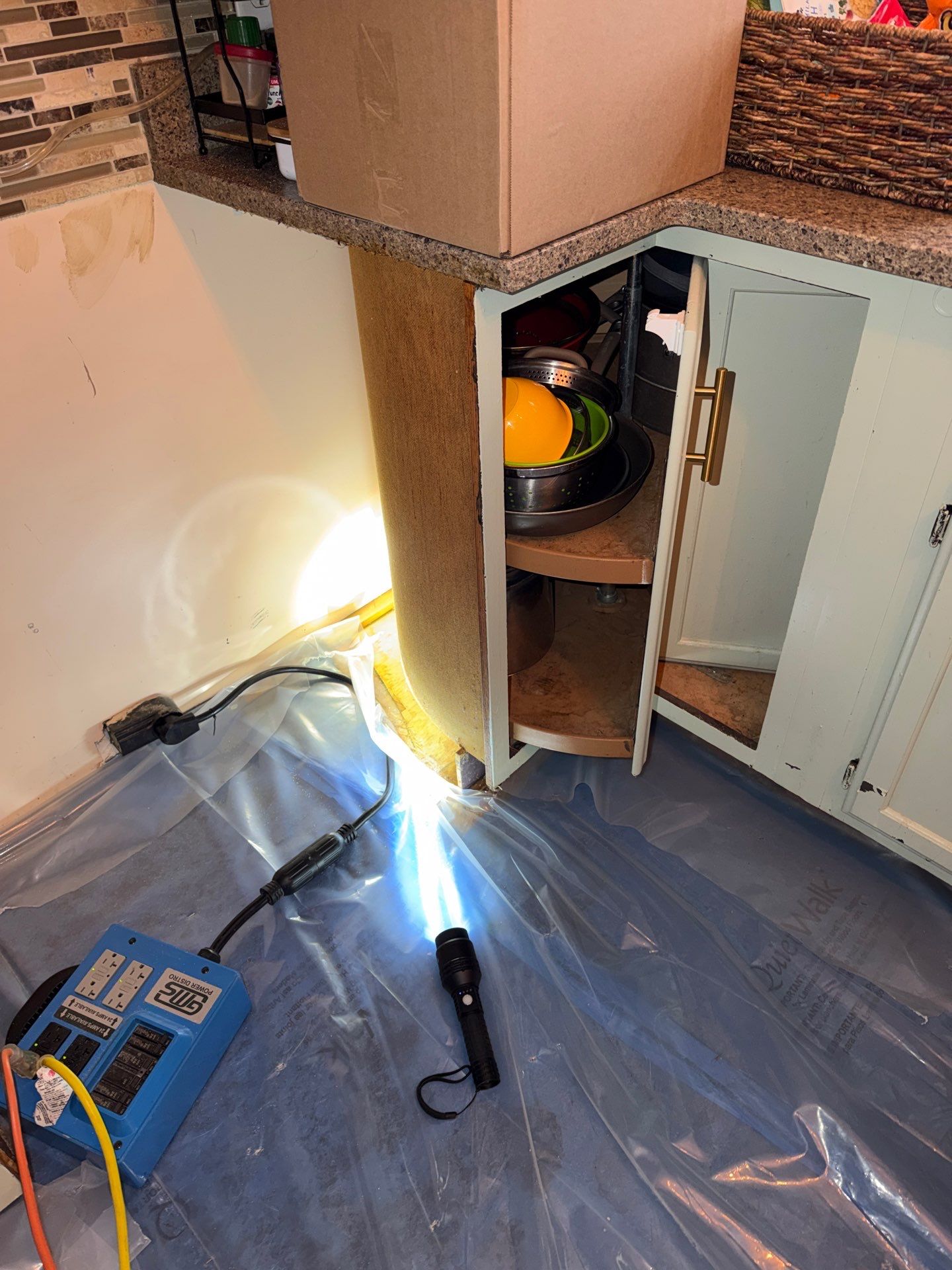
One Pheasants Run homeowner called Pheasants Run Water Restoration at 2:14 AM after a supply line under her kitchen sink let go around midnight. By the time she woke up, water had traveled across the kitchen, into the dining room, and was soaking through to the basement ceiling below. Her first instinct was the right one. She shut off the main, took roughly 40 photos and two short videos before touching anything, then called us.
We had a crew on site within 90 minutes. While our technicians set up extraction equipment and moisture meters, she called her insurance company's after hours line and opened a claim. The adjuster assigned her a claim number before sunrise. That number alone moved her file ahead of three neighbors who waited until business hours to call. Her final payout covered $14,800 in mitigation, cabinet replacement, and flooring. She paid her $1,000 deductible and nothing else. The reason it went smoothly was simple. She documented before mitigation, called us and her insurer in the same hour, and she let our IICRC documentation do the talking with the adjuster.
When the Adjuster Pushed Back
Not every claim moves that cleanly. A homeowner in another Pheasants Run Pheasant Run (Core Residential Area) had a washing machine hose fail while the family was at a weekend soccer tournament. Water ran for somewhere around 30 hours. When we arrived Monday morning, the laminate flooring was cupped, the subfloor was saturated, and mold spores were already visible on the baseboards. This was a clear case where the 48 hour mold growth window had passed, and the adjuster knew it.
The insurer initially tried to deny the mold portion, arguing it was a separate pre existing condition. Our written scope, taken with thermal imaging and moisture readings logged hourly, proved the mold colonies were a direct result of the burst hose event. Within nine days, the carrier reversed and approved the full $22,400 scope. The lesson here is not to argue with adjusters. The lesson is to hire a restoration company that produces the kind of documentation adjusters cannot dismiss.
What helped most in that file was the hour by hour moisture log. We had readings from 47 separate locations across the first floor, each one timestamped and matched to a floor plan we drew on day one. When the adjuster's mold specialist called to challenge the scope, our project manager walked him through that log over a 20 minute phone call. The specialist signed off the same afternoon. That phone call probably saved the homeowner $9,000 in out of pocket exposure.
The Six Steps That Show Up in Every Successful Claim
Looking back at the Pheasants Run claims that paid out cleanly, the same pattern shows up again and again. Here is the short version.
- Stop the water source if you can do it safely, then photograph and video everything before any cleanup begins.
- Call a licensed IICRC restoration company within the first few hours, not the next day.
- Open your insurance claim the same day, ideally within the same 4 hour window.
- Save receipts for every dollar spent, including tarps, fans you rented before pros arrived, and hotel nights if your home is unlivable.
- Let the restoration company speak the adjuster's language on categories, classes, and drying standards.
- Do not sign a final release until all hidden damage is uncovered, especially behind walls and under flooring.
The Supplemental Claim Most Homeowners Miss
A Pheasants Run family thought their claim was closed after the initial $11,000 check cleared. Six weeks later, their hardwood floors started cupping in a hallway we had flagged in our original scope as a watch area. Because we had documented those moisture readings at the start, the supplemental claim went through in under two weeks for another $7,400. Most carriers allow supplemental filings up to a year after the date of loss, sometimes longer. Do not assume the first check is the last word. Hidden damage in Pheasants Run homes routinely shows up 30 to 90 days after the visible repairs are done, and a thorough restoration partner will tell you exactly where to keep watching.
Category Matters More Than Homeowners Realize
A Pheasants Run business owner called Pheasants Run Water Restoration after a toilet supply line burst on the second floor of his rental property. He assumed clean water meant a simple claim. By the time we arrived 14 hours later, the water had traveled through insulation, hit the warm subfloor, and crossed into Category 2 territory. The adjuster pushed for a Category 1 scope and a smaller payout. Our IICRC documentation, paired with the timeline established by the tenant's text messages to the landlord, supported the Category 2 classification and the $18,600 scope that came with it. The difference between categories often decides whether you get $5,000 or $25,000. Our explainer on water damage restoration covers how we set category and class on every job.
What to Say When You Call the Insurance Company
One Pheasants Run homeowner asked us what exactly she should say. Keep it factual and short. Tell them when the loss occurred, what caused it, that you have shut off the source, and that you have engaged a licensed IICRC restoration company. Do not speculate on cause if you do not know. Do not minimize. Do not exaggerate. Ask for your claim number, your adjuster's direct contact, and your coverage limits for dwelling, contents, and additional living expenses. Write everything down. Adjusters change, supervisors transfer, and the homeowner with a written log always wins the harder conversations.
The Claim That Should Not Have Been Filed
A retired couple in Pheasants Run called us after a slow shower pan leak finally showed up as a stain on their living room ceiling. They wanted to file a claim. We opened the wall, traced the leak, and told them the truth. The damage had been developing for at least 18 months based on the staining patterns and the calcium deposits we found. Standard homeowners policies almost universally exclude long term seepage. Filing that claim would have triggered a denial, a claim on their loss history report, and possibly higher premiums at renewal.
We did the repair work directly for about $3,200 out of pocket, well under their $2,500 deductible plus the risk of a denied claim showing up on their CLUE report. If you want to understand which scenarios actually qualify, our breakdown of what homeowners insurance covers for water damage walks through the sudden and accidental rule that decides most claims.