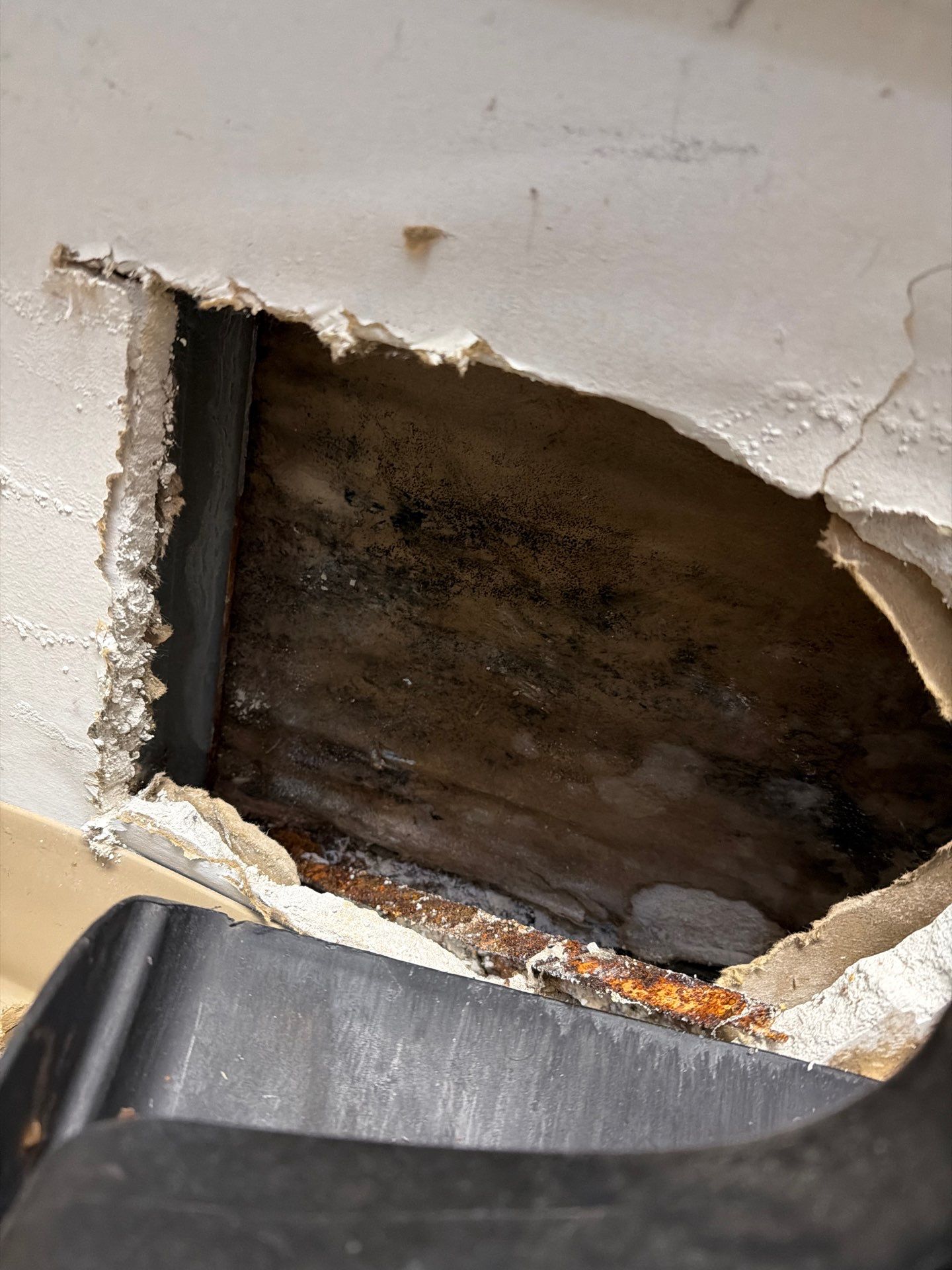
Problem: A Slow Sink Supply Line Leak Is Rotting the Cabinet Base
The most common kitchen call we get in Pheasants Run is not a dramatic flood. It is a homeowner opening the cabinet under the sink and finding the bottom panel black, soft, and smelling sour. A braided supply line or shutoff valve has been weeping for weeks. The water pools on the cabinet floor, soaks into the particleboard, and wicks into the subfloor underneath. You will notice a musty odor before you ever see standing water.
Category matters here. Clean supply line water starts as Category 1, but once it sits on porous material for more than 24 to 48 hours, the IICRC reclassifies it as Category 2 because of bacterial growth. That single detail changes how we treat the materials and what insurance will cover.
The other detail worth knowing is that braided stainless supply lines have a useful life of about 5 to 8 years. If yours came with the house and you have lived there longer than that, you are on borrowed time. The rubber liner inside the braid degrades silently, and the first sign is often a pinhole spray that soaks the back wall of the cabinet before you ever look.
Solution: Stop the Source, Document, Then Dry From the Inside Out
Here is the order that protects your claim and your home:
- Shut the angle stop valve under the sink. If it will not turn, kill the main at the meter.
- Take photos of the cabinet interior, the valve, and the floor before you touch anything. Insurance adjusters in Pheasants Run want to see the source.
- Pull everything out of the cabinet and remove the toe kick so air can reach the subfloor.
- Call a restoration team to meter the surrounding flooring and drywall for hidden moisture.
We bring in low-profile air movers and a dehumidifier sized to the affected square footage. If the cabinet base is delaminated, it gets cut out. Saving a soaked particleboard panel is not worth the mold risk six months later. For deeper guidance on hidden moisture, our notes on water damage behind walls and hidden leak detection walk through what our meters actually find.
Solution: Pull the Appliance, Test the Cavity, Treat for Microbial Growth
We move the refrigerator, cap the supply line, and run moisture meters in a grid pattern across the floor and lower wall. If readings confirm long-term saturation, we set containment, remove affected flooring, and apply an EPA-registered antimicrobial. When visible mold is present, the scope shifts toward remediation protocols. If that is your situation, our overview of mold after water damage covers what comes next.
Solution: Treat It as Contaminated, Not Just Wet
Grey water requires antimicrobial treatment of any surface it touched. We remove and discard absorbent materials like the cabinet base panel, sanitize the cavity, and dry the surrounding structure. Cutting corners here is how homeowners end up with a sour smell that never leaves.
Problem: The Refrigerator Ice Maker Line Has Been Leaking for Months
This is the sneakiest leak in any Pheasants Run kitchen. The quarter-inch plastic line behind the fridge develops a pinhole, and the slow drip runs down the back of the unit into the subfloor. Because the fridge is rarely pulled out, the damage often does not surface until you see buckled flooring two feet away or notice the baseboard separating from the wall. By that point, mold is usually present behind the appliance.
Saddle valves are a frequent culprit. The small piercing valves used to tap a cold water line for the ice maker were never designed for permanent service, and they corrode at the point of contact. If your install is more than ten years old and uses one of these, plan to replace it with a proper quarter-turn valve the next time the fridge moves.
Problem: Your Dishwasher Flooded the Kitchen Floor Overnight
Dishwashers fail in two ways. The supply line bursts, which dumps clean water fast, or the door gasket fails mid-cycle and pushes sudsy water across the floor in pulses. Either way, the water goes exactly where you cannot see it: under the dishwasher, under the adjacent cabinets, and along the seam where the floor meets the toe kick. Laminate and engineered hardwood swell within hours. Tile may look fine on top while the thinset and subfloor below are saturated.
If the leak happened during a wash cycle, the water also carries detergent residue, which leaves a film that attracts soil and slows evaporation from the slab or subfloor. That is one reason Pheasants Run Water Restoration technicians rinse the affected cavity before drying it.
Solution: Extract, Lift, and Verify With Moisture Readings
Surface mopping is not enough. The water under the cabinet kick plate has nowhere to evaporate to on its own. We extract with a weighted wand, pull the dishwasher forward, and check the floor cavity. If the subfloor reads above 16 percent moisture content, structural drying is required. Our full process is detailed on the water damage restoration service page, but for a typical kitchen dishwasher loss in Pheasants Run, expect drying equipment to run 3 to 5 days. Total mitigation usually falls between $1,800 and $4,500 depending on how far the water traveled.
Solution: When to Call Versus When to Watch
- Call immediately if water has been present more than 24 hours, if you smell mildew, or if flooring is warping.
- Call within the day if the leak is fresh but reached more than one cabinet or crossed into the adjacent room.
- Monitor on your own only if you caught the drip immediately, it was clean water, and nothing porous was saturated.
Problem: The Garbage Disposal or Sink Drain Is Leaking Grey Water
Drain side leaks are different from supply side. The water is Category 2 grey water from day one, carrying food particles, soap, and bacteria. It tends to leak only when the sink is in use, which makes the source hard to spot. You may see staining on the cabinet floor without ever catching it dripping. The disposal itself can also crack at the lower housing seam after years of vibration, which produces a fine spray rather than a drip.