Commercial Mold Remediation in Pheasants Run, IN
Commercial mold work in Pheasants Run scoped from moisture readings, contained for occupied space, and documented for ownership.
Need Commercial Mold Remediation in Pheasants Run? Pheasants Run Water Restoration schedules certified assessments, delivers written scopes before any work starts, and coordinates with your insurance carrier on approved claims. Call (765) 436-6771.
- Service: Commercial Mold Remediation for Pheasants Run homeowners
- Service area: Pheasants Run, IN and surrounding areas
- Response time: Scheduled inspection, typically next business day or sooner
- Licensed and insured (License #RC21100059)
- Serving Pheasants Run, IN since 2018
Commercial Mold Removal in Pheasants Run
For commercial buildings in Pheasants Run, we'll track down the water feeding mold growth before any material comes out.
Moisture Sources Here
Buildings near the Wabash River can take on floodwater, and anything left wet afterward can grow mold. We'll go over the air handling and any past leaks on the first walkthrough with whoever runs the building.
We take commercial mold jobs anywhere in Pheasants Run, including the streets around Tippecanoe Mall. We also handle commercial mold work in Battle Ground and West Lafayette.
Commercial Mold Remediation for Pheasants Run Businesses
A supply line split over a weekend, and the standing water was extracted on Monday without anyone opening the walls. By the time a tenant mentions a smell, the cavity has been damp for weeks. EPA guidance says mold can start growing on damp materials within 24 to 48 hours. Pheasants Run Water Restoration surveys and scopes these late discoveries in Pheasants Run.
Commercial mold work starts with a scheduled inspection, and Pheasants Run Water Restoration sets it up around your building's access rules in Pheasants Run. The first visit covers moisture readings across the affected area, a look above the ceiling grid or behind the finish where the readings point, and photos of what's there. You'll know the likely boundary and the source before anyone talks about scope or price.
Restarting the air handler comes after the zone is cleared and the containment is down. Pheasants Run Water Restoration coordinates with your Pheasants Run building engineer, who changes the filters on the affected unit and brings the system back up with the registers unsealed. Any duct work flagged earlier goes to your HVAC contractor before that restart, and the final readings get taken with the air moving.
Photographs taken before anything gets touched are among the most useful in a claim file. Take wide shots of each room, close ups of the staining with something in the frame for scale, the back of any lifted ceiling tile and the suspected source, all with date stamps on. Pheasants Run Water Restoration adds its own photographs once the crew is working in Pheasants Run, and your set shows the condition as found.
Property managers who call Pheasants Run Water Restoration before opening a damp wall save themselves the larger problem of a distributed one. Inspections in your Pheasants Run building get scheduled around your access rules. The crew builds containment, establishes negative pressure with HEPA filtration, and works to IICRC S520 so the documentation holds up with ownership and with your carrier.
Signs You Need Commercial Mold Remediation
If you notice any of these in your Pheasants Run building, schedule a free inspection before the issue worsens.
Laminate or wood flooring that cups or buckles in a ground floor retail space
Lower level carpet or drywall that stayed wet for days after storm water came in at a door
Rust or corrosion along the bottom track of metal studs where a wall has been opened
A room that was dried out after a leak but still smells damp weeks later
Pipe insulation above the ceiling that's wet or hanging loose from a chilled water line
Ceiling tiles with staining on the back side that only shows when you lift one out of the grid
Musty air that greets staff on Monday mornings after the weekend HVAC setback
Cove base pulling away from the wall with dark residue on the back of it
Cabinet bases in a break room that have swollen or delaminated around a sink supply line
A ceiling stain sitting directly beneath an upstairs restroom or break room
How Pheasants Run Water Restoration Handles Commercial Mold Remediation
We follow these steps in order on every Pheasants Run job.
Initial Call and Access Planning
You describe what you're seeing and Pheasants Run Water Restoration asks about the building: occupancy, access rules, who holds the keys and whether anyone has opened the area. That conversation sets up the inspection around your schedule.
Written Scope and Approval
The Pheasants Run Water Restoration team puts the findings in writing: containment boundary, which assemblies come out, which get cleaned in place, and the moisture source that has to be corrected. The building owner or property manager approves it before any material is disturbed.
Contents and Finish Protection
Furniture and equipment inside the work area get photographed, then moved out or wrapped. Floors and finishes along the haul route are covered, so the rest of the building stays protected while the work runs.
Containment Teardown
Once cleaning and any verification are complete, the crew HEPA vacuums the barrier and folds the poly inward as it comes down. Negative air machines run until the last sheet is off the framing, and the floor gets a final wipe.
Source Correction and Rebuild
The moisture source gets corrected or assigned in writing to the mechanical or roofing contractor responsible for it. Once drying readings hold, Pheasants Run Water Restoration rebuilds what came out: framing repairs, insulation, gypsum board, ceiling grid, flooring and finishes.
Commercial Mold Remediation in Pheasants Run
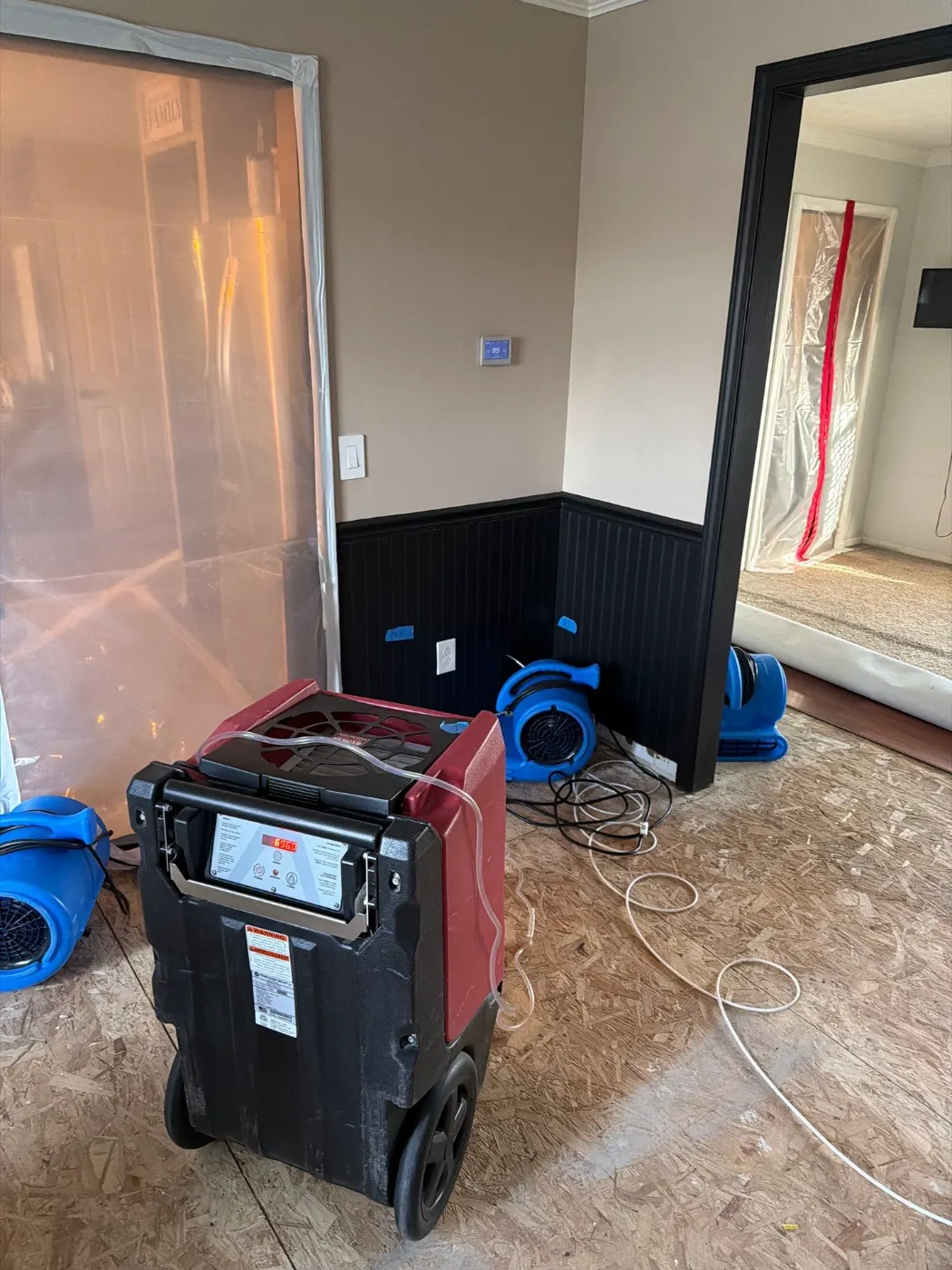
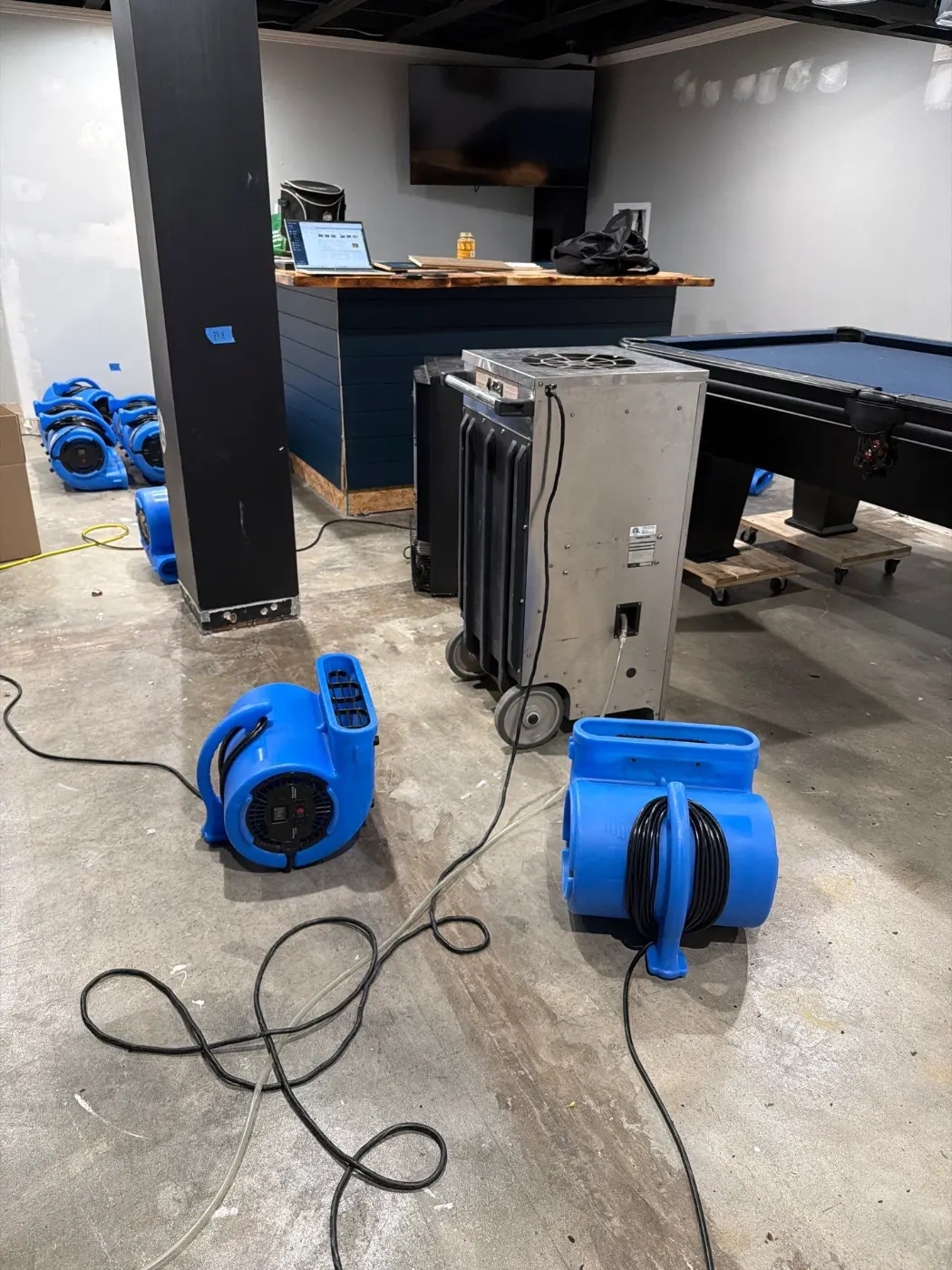
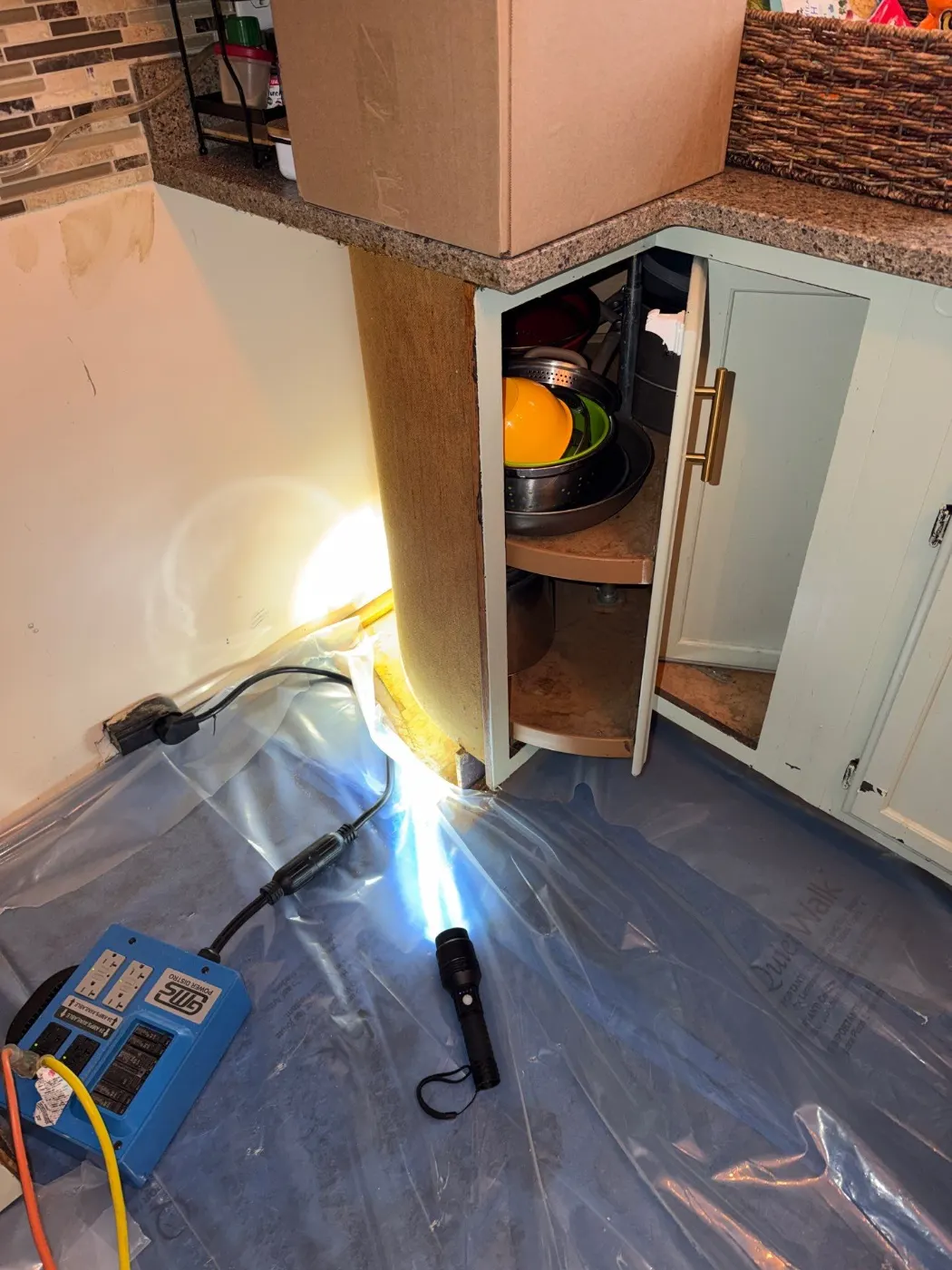
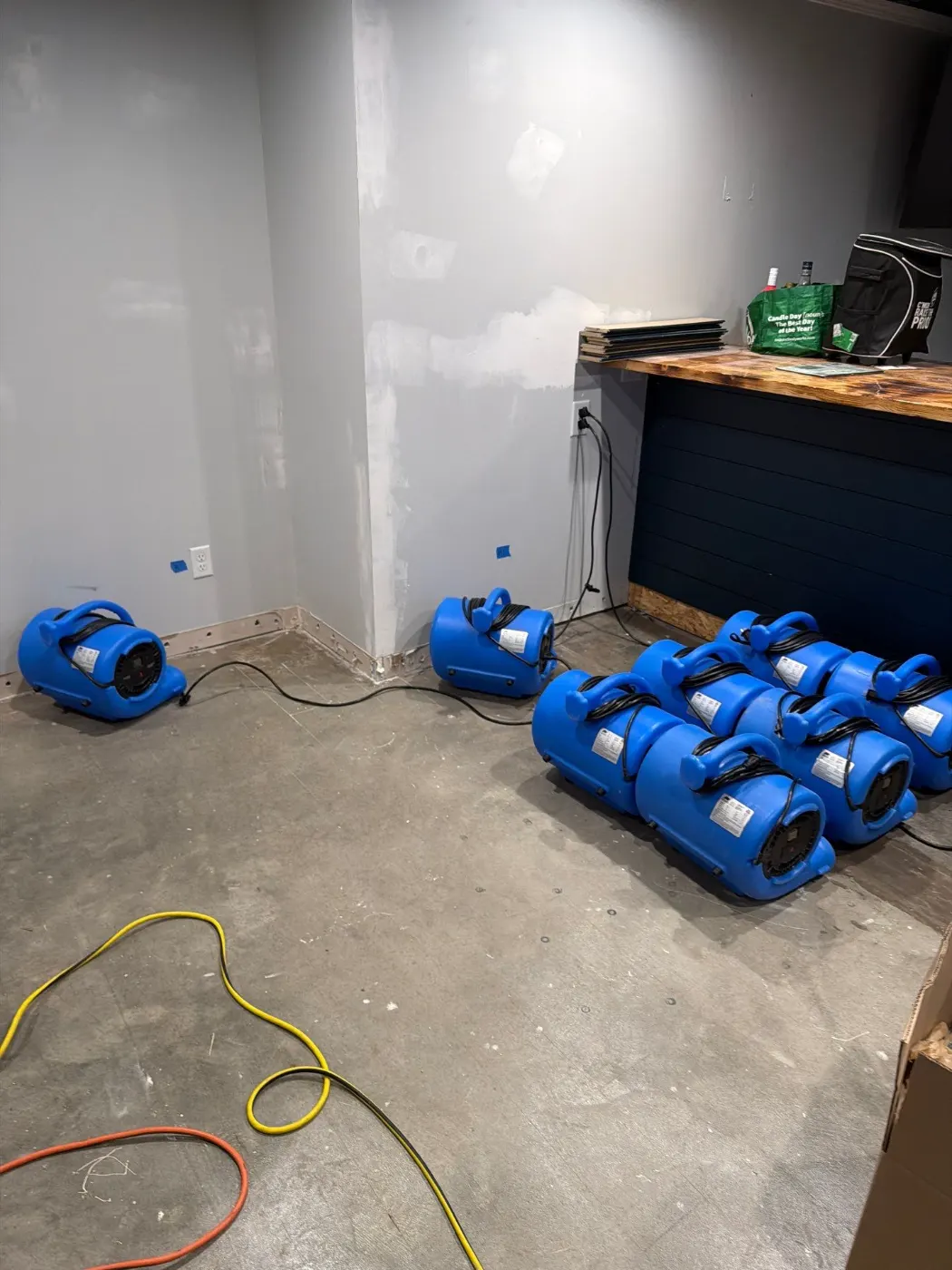
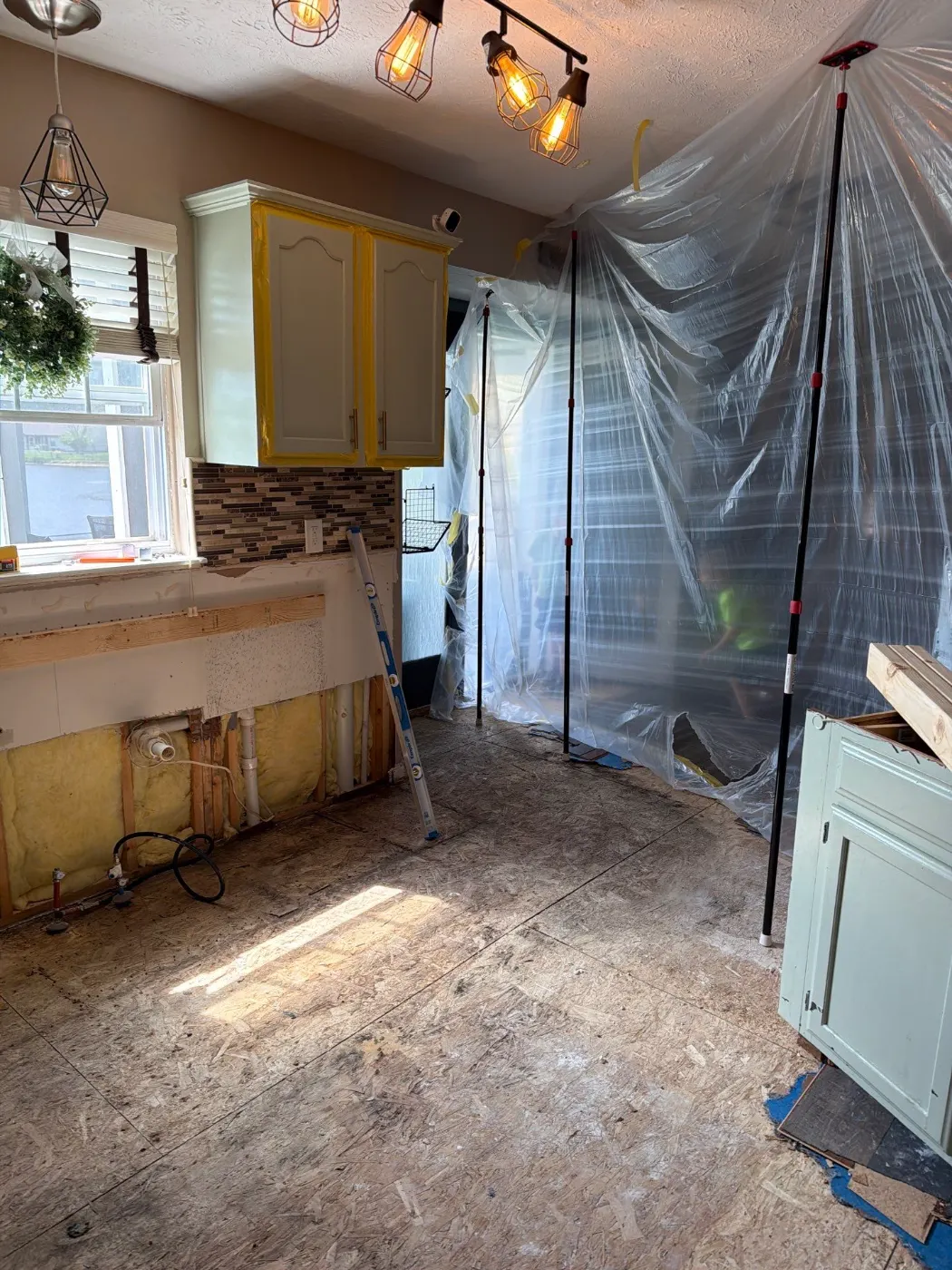
Photographs from real commercial mold remediation jobs completed by our crew in Pheasants Run and surrounding areas.
Commercial Mold Remediation FAQ
Questions Pheasants Run property managers ask us about commercial mold remediation.
Guidance and Standards for Commercial Mold Remediation
- The ANSI/IICRC S520 is the published standard for professional mold remediation. The current edition is the Fourth Edition, 2024. IICRC S520 Standard
- EPA’s mold guide says the key to mold control is moisture control. EPA: A Brief Guide to Mold, Moisture and Your Home
Pheasants Run Neighborhoods We Serve
We take commercial mold remediation calls in every part of Pheasants Run. Pick your neighborhood for local details.
Other Restoration Services in Pheasants Run
Pheasants Run Water Restoration handles the full scope of restoration work. Explore our other services below.
Water Damage Restoration in Pheasants Run
24/7 emergency response. IICRC certified water restoration from extraction to full dry out.
Learn more →Basement Flooding in Pheasants Run
Basement water emergencies handled fast. Extraction, drying, mold prevention.
Learn more →Sewage Cleanup in Pheasants Run
Category 3 biohazard cleanup. Full containment, decontamination, structural restoration.
Learn more →Request Commercial Mold Remediation
Reach Us Directly
Our team is available 24/7 for emergencies and ready to schedule inspections during business hours.
Need Immediate Help?
For active water or mold emergencies, call us directly. We are available 24/7.